
Decatur Previous Resident Sources
A sound address history separates ownership, occupancy, and the building itself. Probate deeds show legal title. A directory is a publisher's named entry at a cutoff date. A telephone book reflects listed subscribers. The census captures an enumerated household on one reference date. Sanborn maps show the built setting, while permits record work requested from the city. None replaces the others. Their disagreements are often the most useful clues.
| Source | Verified Decatur Years | Where Held | What It Shows |
|---|---|---|---|
| Morgan deeds and indexes | Deeds 1820–1901; indexes 1820–1895 in cataloged digital groups; modern portal cutoff unknown | Morgan Probate, Morgan Archives, FamilySearch catalog | Owners, instruments, and legal descriptions |
| Limestone historical land records | Pre-1900 deeds, taxes, and plats | Limestone Archives and Probate | Limestone-side ownership and parcel clues |
| City directories | 1913–14, 1917–18, 1942–55, 1958, 1969, 1996, 1998, 2001 | Alabama Archives and Morgan Archives | Names and addresses; fields vary by volume |
| Telephone books | Runs from 1936 through 1977 | Library of Congress digital collection | Listed subscriber, address, and telephone |
| Federal census | Public through 1950 | Federal schedules and research repositories | Household, relationship, age, and occupation |
| Sanborn maps | 1888, 1894, 1898, 1903, 1908, 1913; 1927 atlas cataloged | Library of Congress and archives | Footprint, material, use, and street label |
| City permits and code files | No online coverage verified | Decatur departments by request | Construction, alteration, and enforcement |
For recent work, begin with the parcel and acquisition deed. For an early twentieth-century address, combine deeds, maps, directories, and census schedules. The legal description is the thread that can survive a changed street or locality name.
Trace Decatur Owners Backward
First decide which county holds the land. Most Decatur parcels lie in Morgan County, but the city extends into Limestone County. Search Decatur's County Boundary layer or a county parcel map, then use the matching Revenue roll. The assessed owner and parcel number are starting clues. Title comes from the deed recorded by the county Probate office.
- Save the current parcel number, situs address, owner name, legal description, subdivision, lot and block, deed book/page, and tax year when displayed.
- Find the current owner's acquisition deed. Record the grantee, grantor, execution and recording dates, instrument or book/page, and full legal description.
- Search the seller, now the grantor, as an earlier grantee within a narrow date range. Confirm that the legal description matches.
- Repeat the handoff from grantee to grantor. Do not assume a same-name result concerns the same parcel.
- When the online index stops, call Probate and move to deed books, the public room, Morgan Archives, or Limestone Archives. The online cutoff was not published.
For Morgan land, begin at the Morgan Probate records site. If the interface fails, call 256-351-4675 with the owner, legal description, estimated purchase year, and any book/page. Limestone-side Decatur uses the ING Probate landing page or the Probate counter in Athens. Its portal separates land records from probate cases.
- Grantor
- The person or entity transferring an interest in the deed.
- Grantee
- The person or entity receiving that interest.
- Chain of title
- The linked sequence of transfers for the same parcel.
- Legal description
- The parcel description in lot, block, subdivision, or metes-and-bounds terms. It is more durable than a street label.
Decatur Deeds Beyond the Portal
Online access is only one channel. The modern Morgan Probate portal did not expose a reliable start year, complete field list, or image price during research. The office counter and telephone route therefore remain part of a full search. Courthouse renovation also moved Morgan Probate temporarily to 401 2nd Avenue SE in 2026 while recordings and online service continued. Confirm whether the public records room has returned before visiting.
Older Morgan groups in the FamilySearch catalog include deeds from 1820–1901, deed and mortgage indexes from 1820–1895, mortgage books from 1897–1901, real-estate sales from 1879–1904, and other real-estate and debt books from 1825–1879. Images may require a login or affiliate location. They are clues, not certified copies.
Morgan Archives is the key offline bridge. Staff accept narrow research requests, permit personal cameras, and hold inactive county records, directories, maps, newspapers, probate material, voter and census records. Basic staff research costs $15 for Alabama residents or $25 for out-of-state requests and includes ten copies, then costs $1 per added copy. Call 256-351-4726 before sending a land request.
Note: State whether the need is a clue image or a certified deed, because only the record custodian can issue certification.
Limestone Decatur Previous Residents
A Decatur mailing address can point to Limestone County land. The county's Probate Judge handles deeds, title, estates, wills, and real property. Search the current parcel by Name, Parcel Number, or Address in Revenue Citizen Access, then carry the legal description to the land-record side of the Probate system. Published recording fees concern filing instruments, not necessarily the price of a public copy, so ask the office for current copy or certification charges.
The successful manifest capture shows the Limestone land and probate records entry.
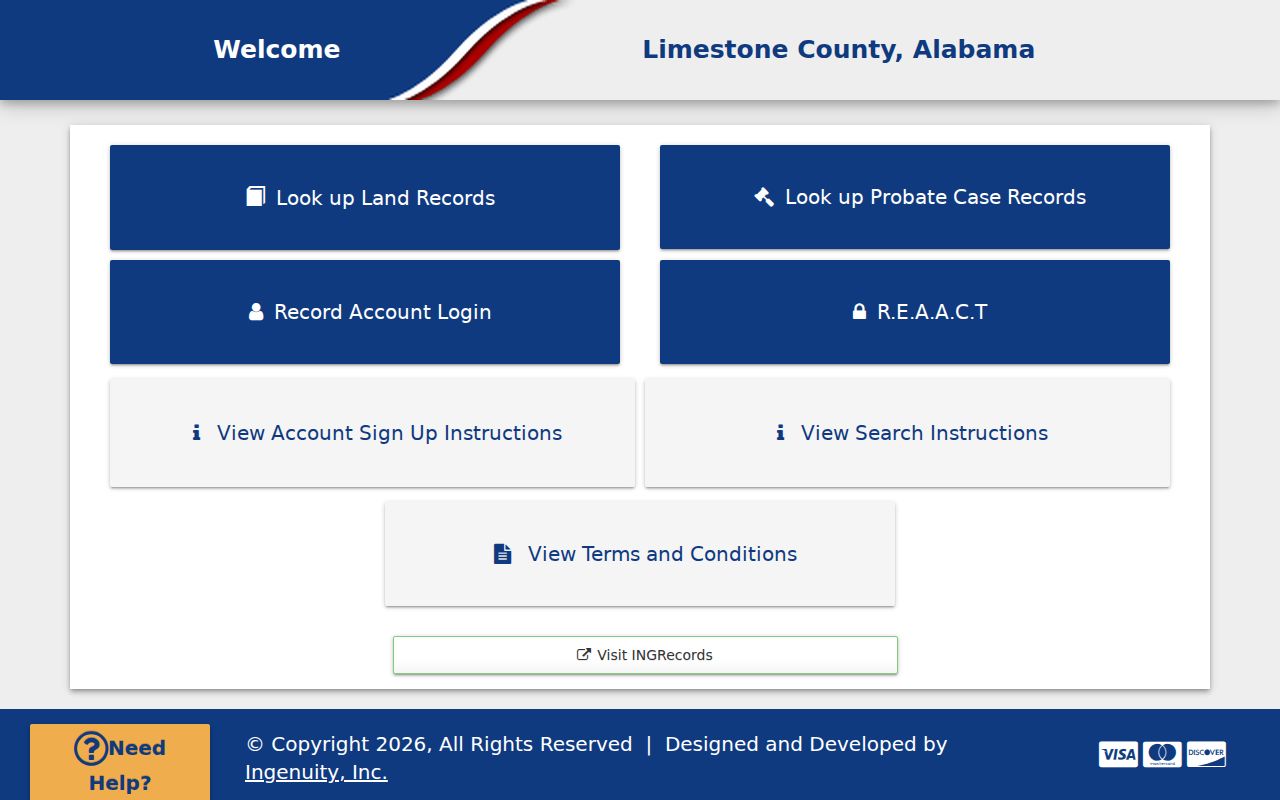
The split between Land Records and Probate Case Records matters. A deed belongs where the land lies. A will commonly belongs where the decedent lived. One person can therefore leave a Limestone deed and a Morgan estate file. For pre-1900 material, Limestone Archives has deeds, tax material, plats, wills, court cases, and a Master Index. Search a person as last name, then first name or initial; underlined hits open documents, while other records can be ordered.
Decatur Addresses Changed Names
Locality history can hide past residents without any move. New Decatur incorporated in 1887, was renamed Albany in 1916, and merged with Decatur in 1927. Fairview also became part of the consolidated city. Before 1916, search New Decatur. From 1916 through 1927, search Albany. After consolidation, search Decatur, while allowing time for publishers and record keepers to adopt the new label.
No authoritative citywide street-renumbering date or table was located. Do not invent one when an old and new number fail to match. Use the deed's legal description, subdivision and lot, map footprint, owner sequence, and neighboring parcels to test continuity. The 1894 Decatur and New Decatur Sanborn atlas helps identify the street name, building outline, construction material, and use in that edition. A Sanborn sheet cannot name the occupant by itself.
This New Decatur-to-Albany-to-Decatur shift is a classic address trap. A person can stay in the same building while the locality printed beside the address changes twice.
Match Decatur Previous Households
Ownership intervals set the frame, but previous residents may include family members, boarders, or renters who never signed a deed. Pair each interval with the closest available directory or telephone book, then use the 1940 or 1950 census when the date fits. The full collection history belongs to the Decatur city directory; here the volumes serve as evidence in one address trail.
- Choose a directory year just before and after the deed date or event. Search Decatur plus New Decatur or Albany when the era calls for it.
- Record only fields actually printed: name, address, phone, spouse clue, occupation, or cross-reference. Inspect the volume's title and key.
- Compare the entry with the nearest public census. The census shows a household on its enumeration date, not everyone present throughout the decade.
- Use a Sanborn sheet to test whether the same structure and street label existed. Use the legal description when the address changed.
- Explain conflicts. An unlisted phone, a renter, a publication cutoff, a vacancy, or a move between record dates can account for a missing name.
- Criss-cross directory
- A directory organized by street or telephone number rather than only by surname.
- Enumeration district
- The geographic area assigned to one census taker. It helps narrow an address in unindexed schedules.
- Directory cutoff
- The date when a publisher closed updates for that edition, often earlier than the printed year suggests.
What Decatur Record Fires Left
Morgan County courthouse fires in 1926 and 1938 caused loss, but the claim that every early record burned is false. Surviving and cataloged deeds reach 1820. Original Morgan marriage books begin in 1821, with a documented early gap, and probate material reaches the county's first years. Duplicates, indexes, later abstracts, FamilySearch groups, and Archives holdings can reconstruct part of a broken trail.
Treat a missing hit as a research problem, not proof that no transfer or resident existed. Ask whether the office searched an index, an original volume, an inactive record at Archives, or a later copy. Morgan Archives' bound Decatur Daily from 1919 can also reveal deed notices, property advertisements, marriages, deaths, and estate proceedings. Earlier issues survive on microfilm.
Note: Record the repository, volume or index, date searched, and gap encountered so the next source can be tested without repeating work.
Close Decatur Resident Trails
Obituaries and probate files often explain why a name disappears from an address. An obituary may name relatives, a church, cemetery, funeral home, or former place of residence. A probate petition, will, inventory, letters, and heir notice can connect a decedent to an estate. Confirm each clue with the corresponding Probate, cemetery, deed, or vital source instead of treating an obituary as a certified fact.
Reynolds Funeral Home, which has operated since 1929, maintains an official obituary archive, though the completeness of older online years is not stated. Decatur City Cemetery has a map and Magnolia-Sykes grave-finding database. Morgan County Genealogical Society also published a name-indexed Decatur City Cemetery volume. For newspaper gaps, Morgan Archives provides the local counter route.
Lawful use. Trace Decatur previous residents for house history, family research, heirs, or personal curiosity. Never use an address trail to stalk, harass, threaten, or track a living person.
Verify Decatur Previous Residents
Label every finding precisely. An assessed owner is not always the occupant. A deed grantee is a title holder, not a full household. A telephone entry identifies a listed subscriber. A census entry shows who the enumerator recorded on one date. A cemetery lot purchaser need not be every person buried there. These terms protect the accuracy of a Decatur previous residents timeline.
Keep a source log with the record date, retrieval date, office, county, instrument or page, and exact address form. Save blank or redacted fields as they appear. If an online image is enough for a clue, say so. If the result will support an estate or other formal matter, order the certified copy from the custodian. Recent protected addresses, confidential adoption material, and sealed files do not become public merely because another related record is open.
The strongest conclusion may still be limited: “named as owner,” “listed subscriber,” “enumerated at the address,” or “identified in an obituary.” A careful timeline can show who lived here before without claiming more than the Decatur records prove.